Paying off debt comes down to two proven strategies. A debt avalanche vs snowball calculator shows you exactly how each one plays out with your own numbers. One saves you more money. The other keeps you motivated longer. Here is how to pick the right one for your situation.
Take a real example. Say you owe $3,000 on a credit card at 22% APR, $6,000 on a personal loan at 12%, and $1,500 on a store card at 27%, and you put $400 a month toward all three combined. With the avalanche method, you pay off the store card first, then the credit card, then the loan, and you clear the full $10,500 in about 30 months while paying roughly $1,940 in total interest. With the snowball method, you attack the $1,500 balance first regardless of rate, and you finish in the same rough timeframe but pay closer to $2,150 in interest. That $210 gap is the price of motivation over math.
What the Debt Avalanche Method Actually Does
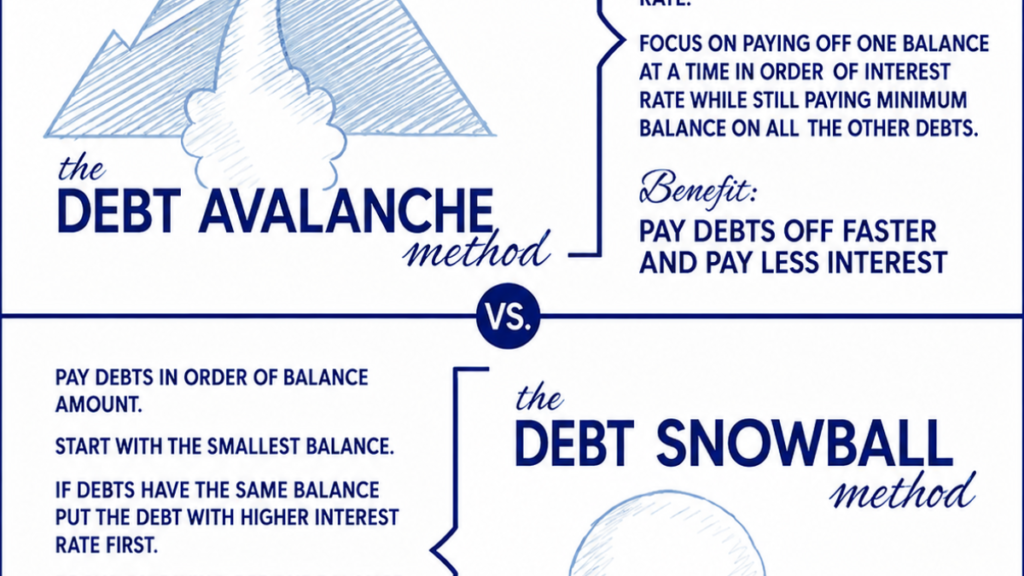
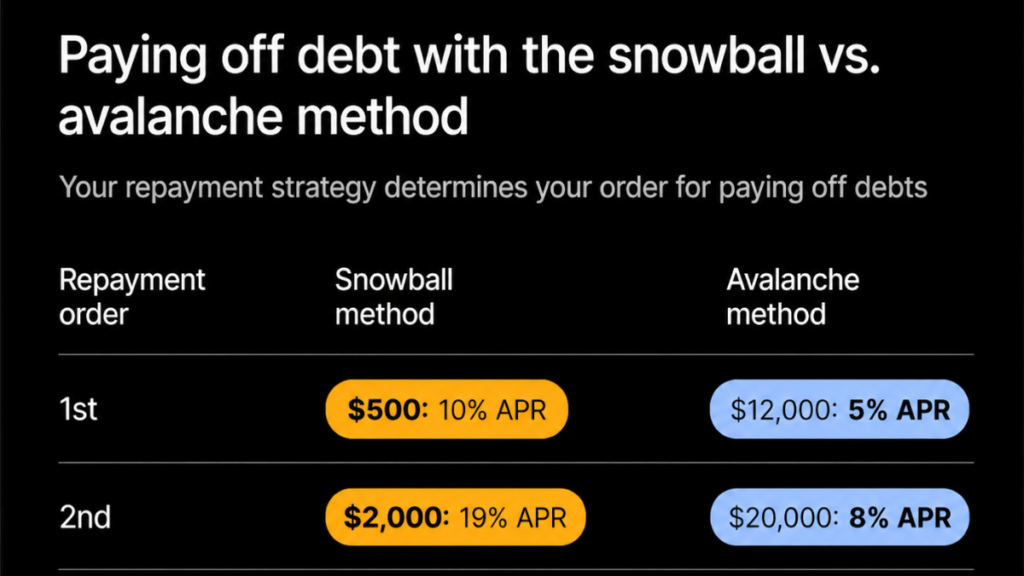
The avalanche method ranks your debts by interest rate, highest first. You pay minimums on everything else and throw every spare dollar at the highest-rate balance. Once that one is gone, you roll its payment into the next highest rate. This method minimizes total interest paid, full stop.
It works best if you already have decent money discipline. You will not see a debt disappear right away, since the highest-rate balance is not always the smallest one. If your top-rate debt is also your biggest balance, expect a longer wait before that first win.
What the Debt Snowball Method Actually Does
The snowball method ignores interest rate completely. You rank debts by balance, smallest first, and pay that one off as fast as possible. Every other debt gets the minimum. Once the smallest balance hits zero, you take that payment and roll it into the next smallest.
This method is built for behavior, not math. Clearing a full balance, even a small one, gives you visible proof that the plan works. Dave Ramsey popularized this approach specifically because early wins keep people from quitting halfway through a multi-year payoff plan.
Avalanche vs Snowball: The Real Numbers
A debt avalanche vs snowball calculator makes the comparison concrete instead of theoretical. Run your actual balances, rates, and monthly payment through both methods and compare two outputs: total interest paid and months to debt-free. The gap between them tells you how much motivation is really costing you.
For most people with three to five debts and a mix of interest rates, the avalanche method saves somewhere between 5% and 15% in total interest compared to snowball. That gap widens the more your rates differ from each other. If all your debts carry similar rates, say within two or three points of one another, the two methods produce nearly identical results, and the choice becomes purely psychological.
According to the Consumer Financial Protection Bureau, the biggest driver of failed debt payoff plans is not the math method chosen but the borrower giving up before the debt is cleared (https://www.consumerfinance.gov). That single fact should shape your decision more than any spreadsheet.
The Insight Most Articles Miss
Most comparisons stop at “avalanche saves more money.” What they skip is that the savings only materialize if you actually stick with the plan for its full duration. A borrower who starts avalanche and quits after eight months, discouraged by slow progress, ends up worse off than one who finishes a snowball plan in eighteen months. The best method is the one you will not abandon.
There is also a hybrid option worth calculating: pay off your one or two smallest debts first for quick wins, then switch to avalanche ordering for the rest. This blended approach often lands within 2% to 4% of pure avalanche savings while keeping the early motivation boost of snowball. Run both versions through your calculator before committing to either extreme.
How to Use a Debt Payoff Calculator Correctly
Enter every debt separately, not as one lumped total. Include the exact balance, interest rate, and minimum payment for each. Small errors in interest rate compound over a multi-year payoff, so pull the real APR from your latest statement rather than estimating.
Set your total monthly payment realistically. If you plan to add windfalls like tax refunds or bonuses, run a second scenario with those included to see the real impact on your payoff date. Once you know your realistic monthly surplus, run it through a budgeting tool (https://savingsbeat.online/budgeting-tools) to confirm the number is sustainable, not just optimistic.
Compare both methods side by side using the same inputs. The only variables that should change are the payoff order and the resulting interest and timeline. If your calculator shows a big gap between methods, that is usually a sign your interest rates vary widely across debts.
When the Method Matters Less Than the Payment Amount
Here is something calculators reveal that intuition misses. Increasing your monthly payment by even $50 often saves more interest than switching from snowball to avalanche. Before agonizing over method choice, check what a larger EMI or loan calculator (https://savingsbeat.online/emi-loan-calculator) shows for a higher monthly payment on your largest debt. In many cases, that single change outperforms the strategy debate entirely.
Once your debts are cleared, the same monthly amount you were putting toward payoff can shift into savings. Run that freed-up cash through a compound interest calculator (https://savingsbeat.online/compound-interest-calculator) to see what it builds into over the next ten years. That is the real payoff of finishing either plan.
Which Method Should You Choose?
Choose avalanche if you are disciplined, motivated by math, and want the lowest total cost. Choose snowball if you have struggled to stick with financial plans before and need visible progress to stay on track. Both methods get you to zero debt. The only real difference is the path and the price.
Run your own numbers before deciding. A debt avalanche vs snowball calculator takes your exact balances and rates and shows you the true interest gap in dollars, not estimates. For most people, that number is the deciding factor, not any general rule of thumb. Once you see your specific savings amount, the harder question becomes whether you can commit to the plan, not which plan is technically better.