A no spend challenge means you stop all nonessential spending for a set period, usually 30 days. The goal is simple: cut discretionary purchases and see how much you save. Anyone can start one, but the rules decide whether it works or falls apart by day five. This guide breaks down exactly what to allow, what to cut, and how to track your progress.
Start with last month’s spending. Say you normally spend $350 on dining out, subscriptions, and impulse buys. Cut that to zero for 30 days and redirect it into savings, and you have an extra $350 sitting in your account at month’s end. Do that for six months and you have $2,100, enough to cover a real emergency instead of a credit card.
What Counts as Essential vs Discretionary
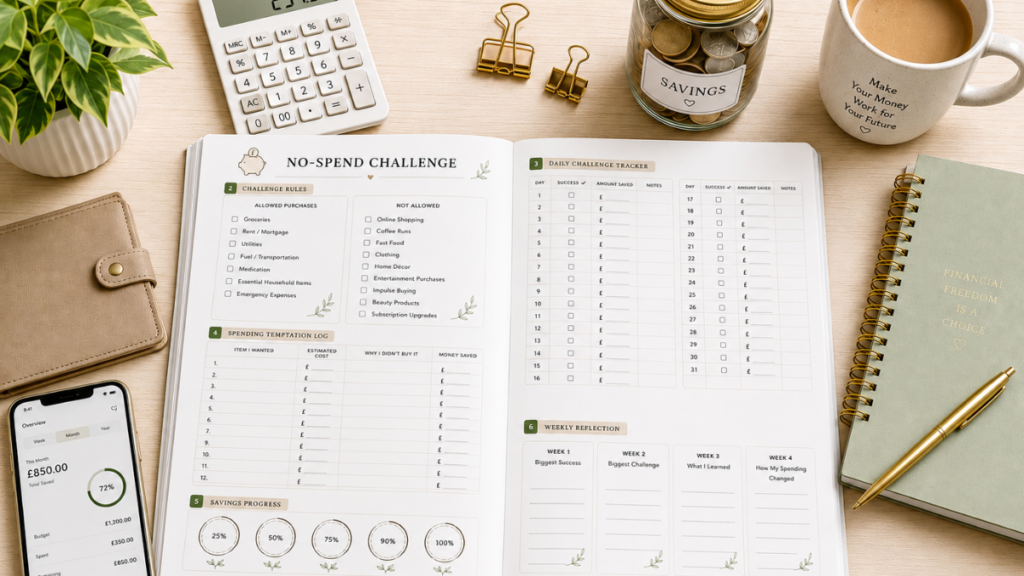
Essentials keep your life running. Rent, utilities, groceries, insurance, minimum debt payments, and medication all stay on the list no matter what. Discretionary spending is everything else: takeout, streaming add-ons, new clothes, impulse buys, and entertainment outside your home. A no spend challenge only targets the second category, not your basic survival costs.
The line gets blurry with a few categories. Gas for your commute is essential, but a weekend road trip is not. Groceries are essential, but a $6 coffee on the way to work is not. Write your own answer for these gray areas before the challenge starts, so you are not debating it in the moment.
Different Ways to Structure the Challenge
Not every no spend challenge has to be a strict full month. A no spend weekend is a good starting point if you have never tried one, since two days is easier to commit to than thirty. A no spend week raises the difficulty slightly and still feels manageable for most people.
Some people choose a category-specific challenge instead of banning everything. You might cut only takeout and delivery apps for 60 days, or stop all online shopping for a full quarter. This version works well if one specific habit is draining your budget more than the rest.
The Core Rules of a No Spend Challenge
Pick a fixed start and end date before you begin. Most people choose a full calendar month, but a single week works too if a month feels too aggressive. Write down your essential list and your discretionary list on paper or on your phone. This removes guesswork in the moment when you are tempted to spend.
Set clear exceptions in advance. If a friend’s birthday or a medical appointment falls during your challenge, decide now how you will handle it instead of deciding in the moment. Run your current expenses through a budgeting tool (https://savingsbeat.online/budgeting-tools) before day one, so you know exactly what counts as essential in your own life. This step alone prevents most of the confusion that makes people quit early.
Track every dollar you did not spend, not just the dollars you saved. Keep a simple note on your phone every time you skip a purchase you would normally make. This builds a real record of your progress and keeps you motivated when the challenge feels hard around week two.
According to the Consumer Financial Protection Bureau (https://www.consumerfinance.gov), tracking spending closely is one of the most effective habits for building financial stability. A no spend challenge forces you to track whether you want it or not. Every time you stop yourself before a purchase, you practice the same skill the CFPB recommends for long term money management.
How Much You Can Actually Save
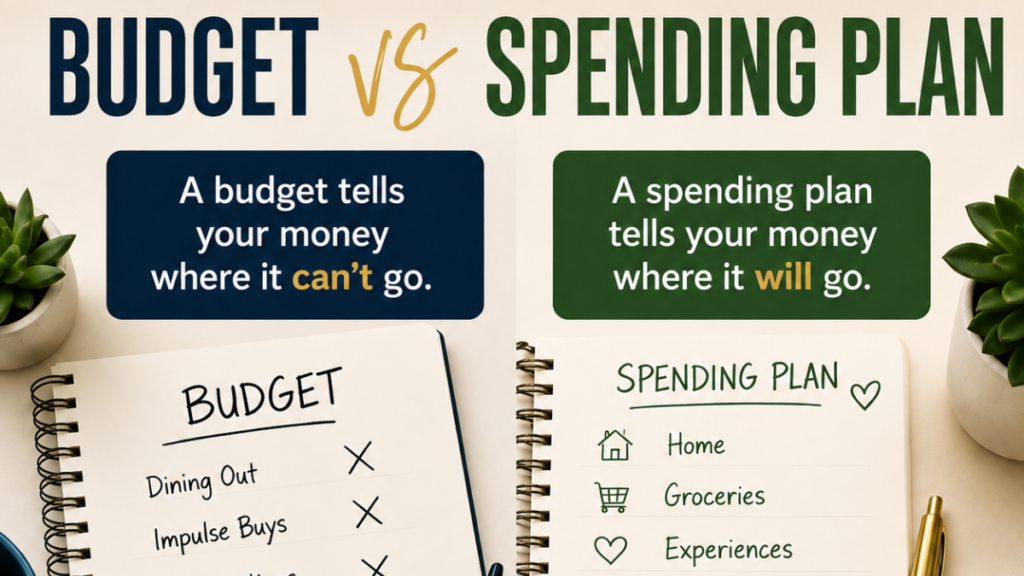
The exact number depends on your habits, not your income. Someone spending $600 a month on nonessentials before the challenge could realistically save $400 to $500 during it, since a few small exceptions are normal. Run that saved amount through a compound interest calculator (https://savingsbeat.online/compound-interest-calculator) if you plan to invest it instead of spending it right after the challenge ends. Even a modest amount grows meaningfully over several years when it stays invested.
Higher earners often see bigger dollar totals but not necessarily bigger percentage gains. Someone earning more may also spend more on convenience and lifestyle upgrades, which means their nonessential category is larger to begin with. The percentage of income saved matters more than the raw number when you compare progress month to month.
Common Mistakes That Break the Challenge
Rebound spending is the biggest risk. Many people finish a strict no spend month and then spend everything they saved in the first week after, which erases the entire point. Vague rules cause the second most common failure, since undefined boundaries lead to constant negotiating with yourself. Decide your rules before day one and treat them as fixed, not flexible.
Going too extreme too fast is another common trap. Cutting every single discretionary expense with no plan for social events or small comforts often leads to burnout by week two. Build in one small planned reward, like a $10 weekly allowance, so the challenge feels sustainable instead of punishing.
Skipping the tracking step is a quieter mistake, but just as costly. Without a record of what you skipped, you lose the motivation that comes from watching a number grow. A simple spreadsheet or a notes app entry after every skipped purchase keeps the challenge visible and real.
What to Do With the Money You Save
Move the saved amount into a separate account right when the challenge ends, before you get a chance to spend it. A savings calculator (https://savingsbeat.online/savings-calculator) shows how many more months of this habit gets you to a specific goal.
Check that saved total against a net worth calculator (https://savingsbeat.online/net-worth-calculator) to see the real long-term impact of one month of discipline. Repeat the challenge every quarter and it stops being an event. It becomes a habit that quietly rebuilds your finances year after year.
Some people split the saved amount into two goals instead of one. Half goes toward an emergency fund, and half goes toward a specific short term goal, like a vacation or a down payment. Splitting the money this way keeps both your safety net and your motivation growing at the same time.
The Bottom Line
A no spend challenge works when the rules are specific and set in advance. Essential spending stays untouched, discretionary spending stops completely, and every dollar you would have spent goes somewhere with a purpose. The real value is not just one month of savings. It is proof that you can control your spending on command, whenever you decide to