A sinking fund calculator takes one future expense and splits it into small, steady monthly deposits. You enter the total cost and your deadline. The tool tells you exactly how much to save each month. This matters because most budget breakdowns come from expenses you actually saw coming.

What a Sinking Fund Calculator Actually Does
A sinking fund calculator works with two inputs only. It takes your target amount and your deadline, then divides one by the other. Say you need $6,000 for a car replacement in 24 months. The calculator shows you need $250 a month, with no interest counted, to hit that number right on schedule.
This is different from a savings calculator that projects growth from interest. A sinking fund calculator assumes the money sits in a low-risk account and focuses only on the contribution schedule. If you want to see what happens when interest gets added on top, a compound interest calculator shows how even small returns speed up the timeline.
Most people underestimate how many expenses actually qualify for this treatment. Car insurance, holiday gifts, annual subscriptions, and home maintenance all show up like clockwork every year. None of them are emergencies. They only feel that way because most budgets track monthly bills and ignore anything that happens once or twice a year.
Why a Sinking Fund Is Not an Emergency Fund
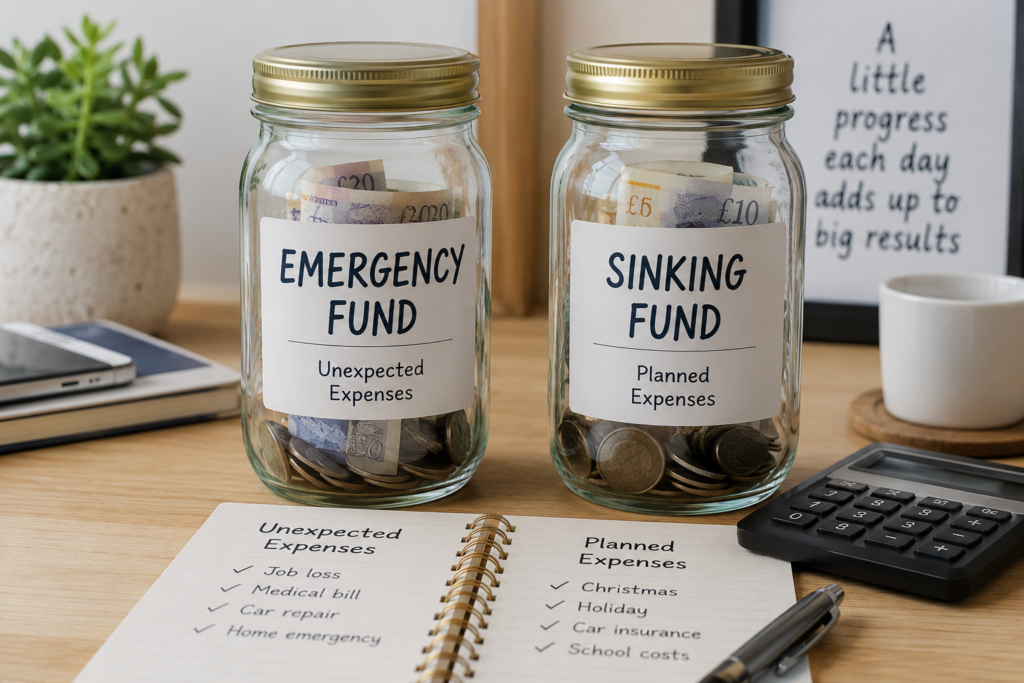
People mix these two up constantly, and it causes real damage. An emergency fund covers something unplanned, like a job loss or a medical bill. A sinking fund covers something you already know is coming, even if the exact amount is a little fuzzy.
Treating a sinking fund like an emergency fund empties both accounts at the wrong time. Treating an emergency fund like a sinking fund leaves you exposed when something actually goes wrong. Keep the two separate, even if they sit in the same bank under different labels.
The Consumer Financial Protection Bureau recommends building regular contributions toward savings goals directly into your monthly budget, rather than treating them as leftover money after everything else gets paid. That single shift is what makes sinking funds work. You stop hoping there’s money left over and start assigning it a job on day one.
How to Set Up a Sinking Fund Without Overcomplicating It
Start with one expense, not ten. Pick something specific, like a $900 insurance premium due in six months, rather than a vague goal like “save more.” A specific number with a specific date is what makes the calculator useful in the first place.
Here’s the setup in order: name the expense, estimate the total cost, set the deadline, subtract what you’ve already saved, then divide the remainder by the months left. Round up slightly if you want a small buffer. This keeps you from falling short by a few dollars right before the bill arrives.
Once you have two or three sinking funds running, check them against your full budget. A budgeting tool can show whether your sinking fund contributions actually fit your income, or whether something else needs to shrink first. If the math doesn’t work, extend the timeline before you cut something essential.
How Many Sinking Funds You Actually Need
There is no fixed number, but most households do fine with four to six active funds at once. Too few, and large categories like insurance and holidays end up lumped together in a way that’s hard to track. Too many, and you spend more time managing labels than actually saving.
A practical starting list usually includes car maintenance, annual insurance, holiday spending, and one home or appliance category. Add a fund only when a real bill has already caught you off guard once. That single rule keeps the list useful instead of turning into a hobby.
Some people also run a short-term sinking fund for something fun, like a trip or a device upgrade. There is nothing wrong with this, as long as it does not compete with the funds covering bills you cannot skip. Order matters more than the total count.
An Original Insight Most Articles Skip
Here’s something most guides never mention. Sinking funds work best when you rank them by how painful the surprise would be, not by how large the dollar amount is. A $150 pet vaccine bill you forgot about can wreck a tight week just as badly as a $900 insurance premium, because the small one arrives with zero warning and no line item waiting for it.
Rank your sinking funds by predictability first, size second. Fund the ones that catch you off guard most often before you fund the big annual bills you already half-expect. This order protects your cash flow more than chasing the biggest number first.
If two funds are tied on predictability, fund the one with the shorter deadline first. A twelve-month runway gives you room to recover from a missed month. A three-month runway does not. This small ordering habit is the difference between a sinking fund system that actually holds up and one that quietly falls behind.
Common Mistakes That Undo a Sinking Fund
The most common mistake is skipping months during tight stretches without adjusting the plan. One missed $100 deposit is not a problem on its own. Three missed deposits in a row means the calculator’s original number no longer matches reality, and the fund will fall short right when you need it.
The second mistake is guessing the target amount instead of checking it. Insurance premiums, tuition costs, and subscription prices all creep upward over time. Pull last year’s actual bill before you set this year’s target, rather than reusing an old number out of habit.
The third mistake is keeping every sinking fund in one account with no labels. Without a clear split, it becomes easy to spend the holiday fund on something else in October and assume you’ll “make it up later.” A separate sub-account or a clearly named budget category solves this in minutes.
Sinking Funds and Your Bigger Financial Picture
Sinking funds are not just a budgeting trick. They protect the progress you’ve made elsewhere. A surprise bill that lands on a credit card undoes months of saving fast, and it quietly drags down your net worth even when your income hasn’t changed.
The scale matters less than the habit. Someone saving $50 a month toward a $600 goal builds the same skill as someone saving $500 a month toward a $6,000 goal. According to Investopedia’s overview of sinking funds, the concept began in corporate finance, where companies set aside money on a schedule to pay down debt before it came due. The personal finance version does the same thing on a smaller, more human scale.
If you are also paying down a loan, the same monthly discipline applies. Running your numbers through an EMI calculator alongside your sinking funds shows whether your fixed debt payments and your savings goals both fit inside one income. That full picture matters more than looking at either number alone.
The Bottom Line
A sinking fund calculator removes the guesswork from saving for expenses you already know are coming. Enter the total, enter the deadline, and the tool gives you one clear number to hit every month. Run your own numbers through a sinking fund calculator today, rank your goals by how much they’d catch you off guard, and start with the one that would hurt the most if it showed up unfunded next month.