
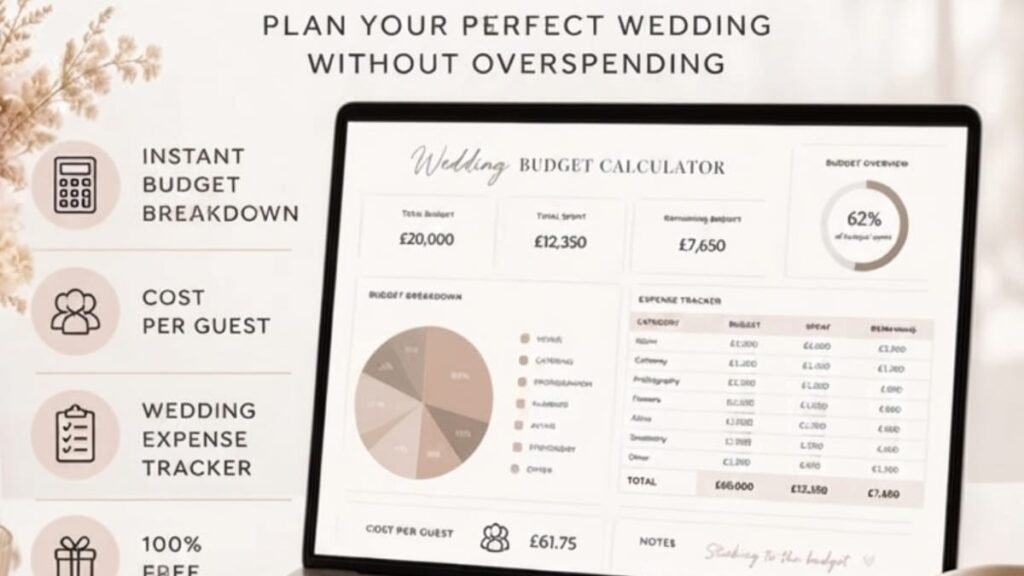
A wedding budget calculator turns a scary total into a manageable plan. Weddings in 2026 average $34,000 to $36,000 nationally, but that number hides huge swings by guest count and city. This guide shows you the real numbers first, then a simple way to build your own budget.
What a Wedding Actually Costs in 2026
Averages mislead people. The $34,000 to $36,000 national figure blends $8,000 backyard weddings with $100,000 ballroom events into one misleading number. The median wedding, what most couples actually spend, sits closer to $18,000. That gap matters more than the headline average.
Guest count drives your total more than any other factor. The 2026 average cost per guest is $290 to $300. Invite 100 guests at $295 each, and your baseline cost lands near $29,500 before you add a single upgrade. Cut the list to 60 guests, and that baseline drops to roughly $17,700.
Location changes the math again. A 150-guest wedding costs around $85,000 in San Francisco but only $43,000 in Milwaukee for the same celebration. Couples in the Northeast and West Coast spend 40% to 55% more than couples in the Midwest or South. Your zip code is a budget line item, whether you plan for it or not.
Where the Money Actually Goes
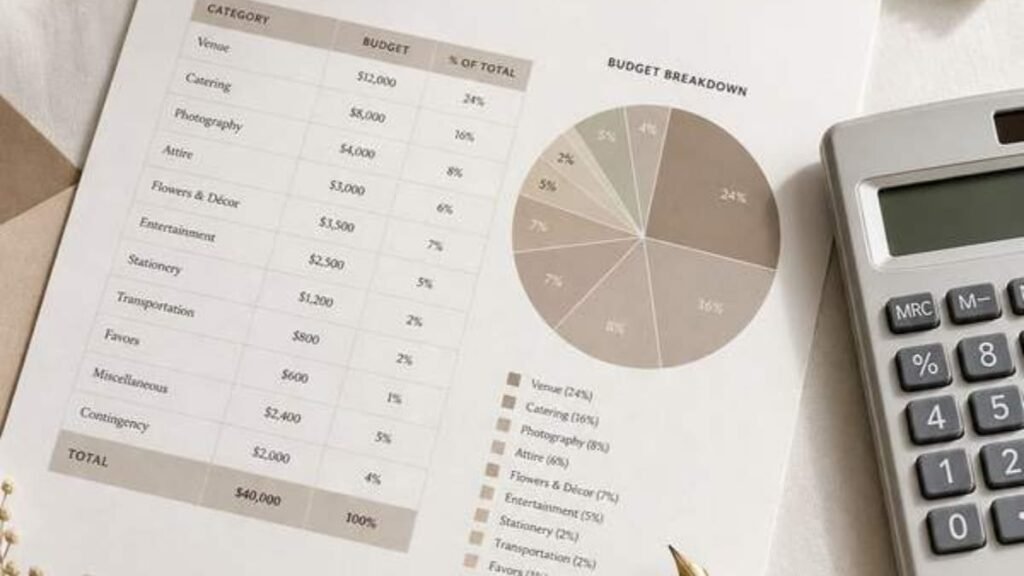
Venue and catering eat the biggest share of any wedding budget. National averages put venue costs near $8,573 and catering near $6,927, together representing 45% to 55% of a typical budget. Photography averages $3,800, florals average $2,900, and entertainment runs $1,700 for a DJ or $4,200 for a live band.
A practical rule for splitting your budget is the 50/50 rule. Put 50% of your total toward venue, catering, and rentals. Split the remaining 50% across photography, florals, attire, entertainment, and everything else, and always hold back 10% as a contingency fund for the costs you did not see coming.
That contingency fund is not optional. Gratuities, alterations, delivery fees, and last-minute guest additions push most budgets past their original number. Building the buffer in from day one keeps a $500 surprise from becoming a $500 argument.
Build Your Budget in Four Steps
A wedding budget calculator only works if you feed it real numbers, not guesses. Follow these four steps before you book a single vendor.
- Set your total first. Decide what you can spend without going into debt, based on savings plus any contributions from family. Run that number through a savings calculator to see how much you would need to set aside monthly to reach it by your wedding date.
- Apply the 50/50 split. Half goes to venue and catering. Half goes to everything else.
- Add your 10% buffer. Set this aside before you allocate a dollar to flowers or favors.
- Track spending against the plan. A simple budgeting tool keeps every vendor deposit and final payment in one place instead of scattered across email confirmations.
Financing a Wedding Without Wrecking Your Finances
Only 15% of weddings are fully paid for by parents today. Most couples, more than 70%, split costs between themselves and their families, which means personal savings and sometimes borrowed money cover the rest. According to the Consumer Financial Protection Bureau, carrying revolving debt at high interest rates makes short-term purchases far more expensive over time, and a wedding financed on credit cards is no exception.
Couples who finance their wedding pay an average of $3,200 in added interest. That is real money that could have covered a honeymoon or a down payment instead. If you need to spread out large vendor payments, compare the true cost through an EMI and loan calculator before you sign anything, so you see the total interest, not just the monthly payment.
Cash-based budgeting, even for a smaller wedding, produces less financial stress in the first year of marriage than a large event funded on debt. That is not a guess. It shows up consistently in couples’ own post-wedding financial reports.
Smart Ways to Cut Costs Without Cutting the Celebration
Guest list size is the single biggest lever you control. Every guest you remove saves roughly $290 to $300 in total cost, so trimming from 150 to 100 guests can save $15,000 or more. Micro weddings with 50 or fewer guests can cost half of a traditional wedding while still delivering the ceremony and reception couples actually want.
Timing matters almost as much as guest count. Off-peak months and Friday or Sunday dates often come with lower venue rates than a Saturday in June. Booking a venue that already includes tables, chairs, and lighting also removes a rental line item that surprises a lot of first-time planners.
Honeymoon spending deserves its own line, too. Couples now allocate an average of 26% of total wedding spend to the honeymoon, more than double the traditional 10% guideline. Deciding that number early, alongside your venue and catering budget, keeps the trip from becoming an afterthought funded by leftover credit.
The One Number Most Couples Get Wrong
Most wedding budgets fail for one reason: couples price the visible costs and skip the invisible ones. Alterations, postage, vendor gratuities, marriage license fees, and delivery charges rarely appear in a venue’s initial quote, yet they routinely add 8% to 12% to a final bill. Building that percentage into your total from the start, rather than discovering it in the final month, is the single biggest difference between a wedding that stays on budget and one that does not.
Final Takeaway
A wedding budget calculator works best when it is built on real 2026 numbers, not guesswork. Start with your guest count, apply the 50/50 rule, hold back a 10% buffer, and price your honeymoon separately from the ceremony budget. Once your plan is in place, track it against a budgeting tool so every payment stays visible until your wedding day arrives. Whatever your final number ends up being, a wedding funded by a clear plan beats one funded by guesswork every time.